
ViennaFES | Cybersportday 2025
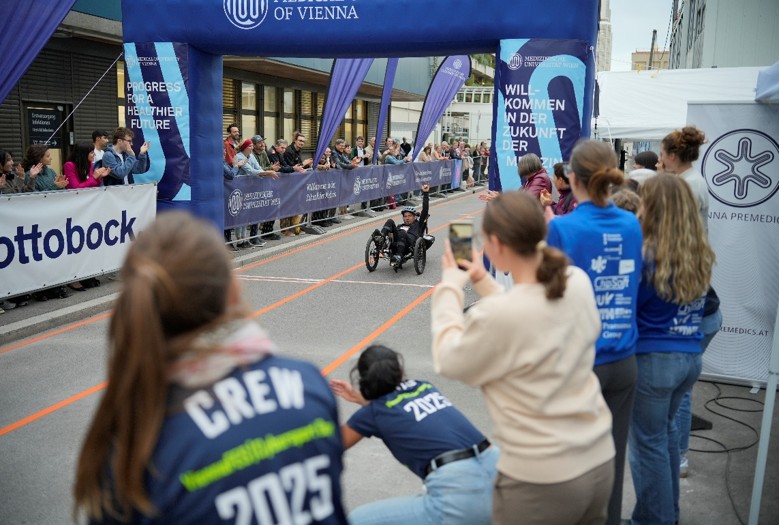
The ViennaFES | Cybersportday 2025 was an exciting international FES-Cycling race in which pilots with spinal cord injuries (SCI) competed using only their paralyzed leg muscles activated by electrical stimulation. The race took place on a 400-meter outdoor track and brought together five pilots from three different countries.
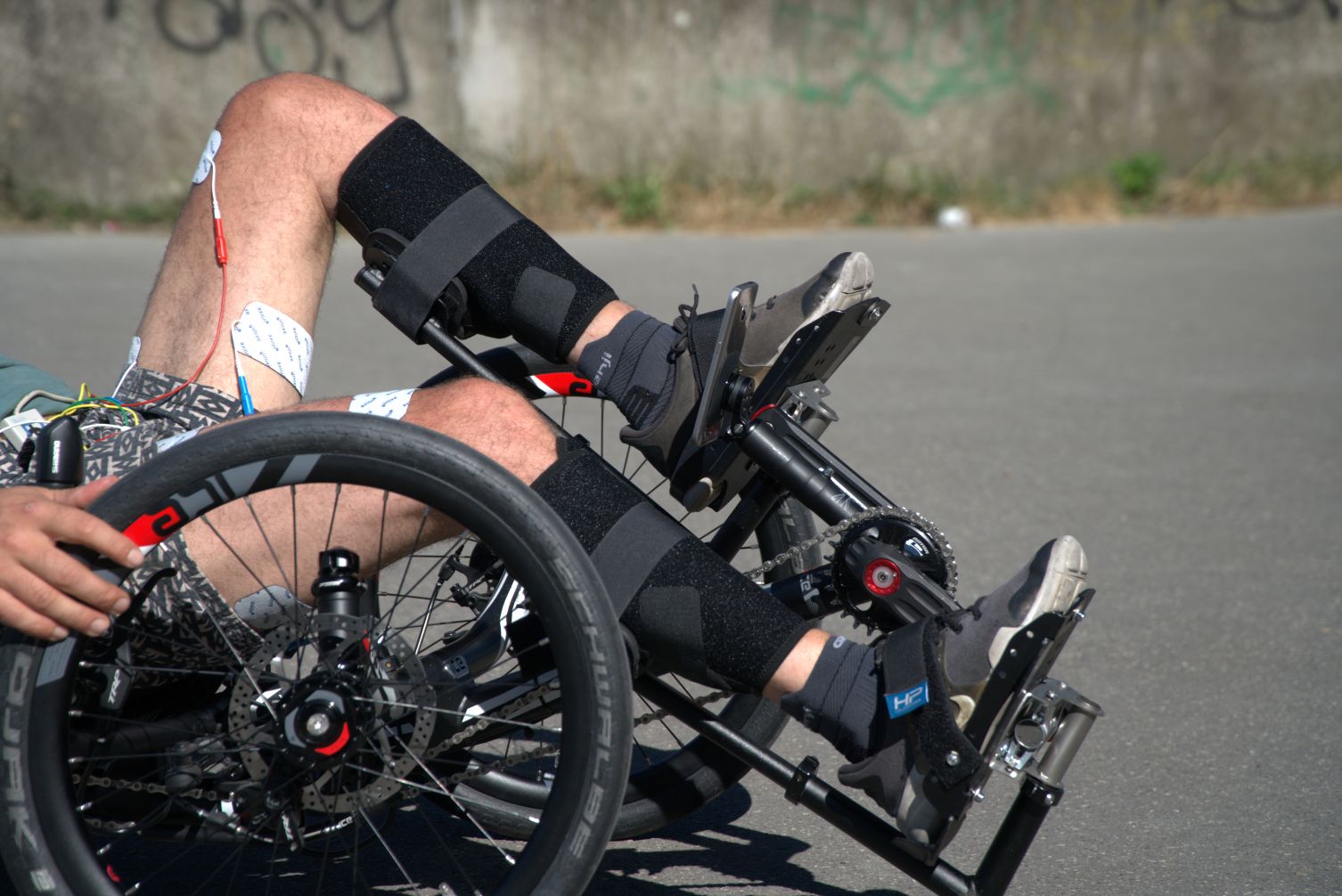
Importantly, all pilots were pedaling exclusively with their fully paralyzed leg muscles activated only via functional electrical stimulation (FES) — a technology that uses small electrical pulses to enable movement. This allowed the pilots to ride real tricycles in a real outdoor sports setting, moving beyond laboratory environments and indoor ergometers.
The event marked an important milestone for the growing FES-Cycling community by demonstrating what is already possible today. A special highlight was the public presentation of a prototype tricycle designed for riders with fully denervated muscles, offering a glimpse into future possibilities for people with even more severe impairments.
The event clearly demonstrated that assistive technology can be more than just rehabilitation. By combining performance and inclusion, competitive sport can drive innovation, increase visibility, and create real-world impact.
Date: 16.09.2025
Location: General Hospital of Vienna (AKH - Michelbeuern)
Organizer: Dipl.-Ing. Dr. Martin Schmoll, (Medical University of Vienna)
Results
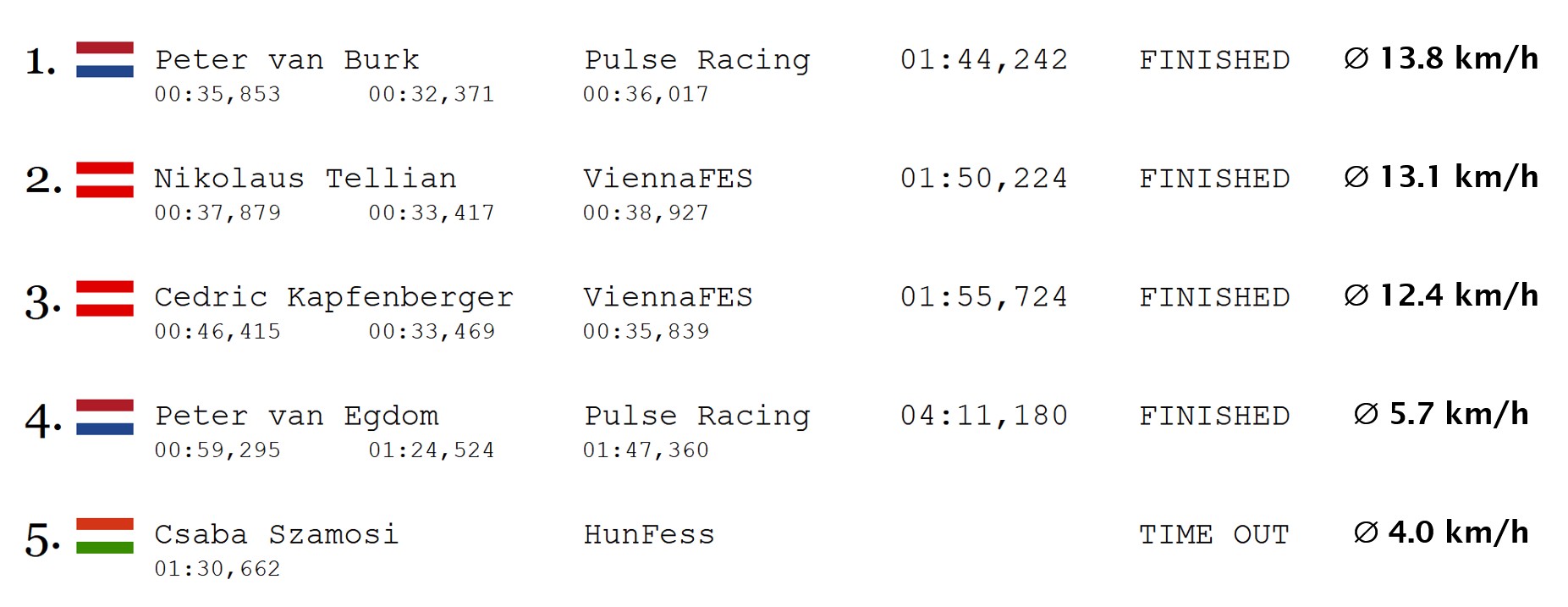
Some of the races were eligible for the Neuroprosthetic Cycling Records initiated by the ETH-Zurich and can be rewatched on Youtube:
Links:
Peter van Burk: 2000 m
Peter van Burk: 400 m
Nikolaus Tellian: 400 m
Cedric Kapfenberger: 400 m
Background
A spinal cord injury (SCI) resulting in the complete loss of lower limb motor control leads to the degradation of the musculoskeletal system of the lower limbs, including muscle atrophy and loss of bone mineral density.
Functional electrical stimulation (FES) is a technology that uses electrical pulses to elicit action potentials in sensory and motor nerves, thus, exciting skeletal muscles that are paralysed. Regular FES cycling exercise after SCI has been shown to lead to beneficial physiological adaptations such as improvements in bone density, an increase of muscle mass, and improved muscular, cardiovascular and respiratory fitness. Besides the application of FES cycling in rehabilitation, it can be of high recreational value to people with SCI. Furthermore, FES can be combined with other assistive technologies such as powered exoskeletons. This allows merging the movement control advantages of a robotic device with the physiological benefits provided by FES. Furthermore, the use of FES hence bears the promising potential to counter some of the deleterious effects to the musculoskeletal system of the lower limbs after SCI, such as osteoporosis, decubitus or spasticity.
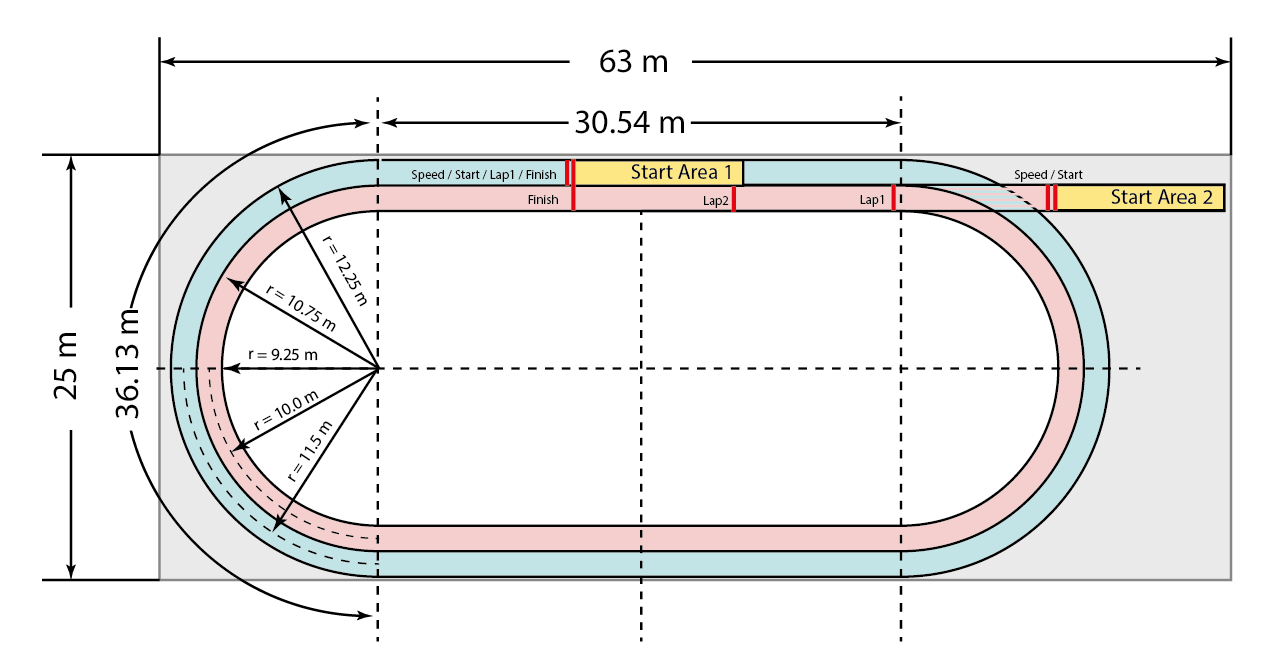
In this race the pilots are invited to participate in a 400 m midrange race on a flat asphalt track, with a rolling start, after conduction a start from stand-still within a specified starting area. In the starting area, the pilot might use his hands, arms or trunk to start from stand-still. The race and time measurement will be started after crossing the starting line. Please note, that the starting line has to be crossed at low speed (max. 5 km/h) and that further usage of the arms after the starting line is prohibited during the race.
Specifications
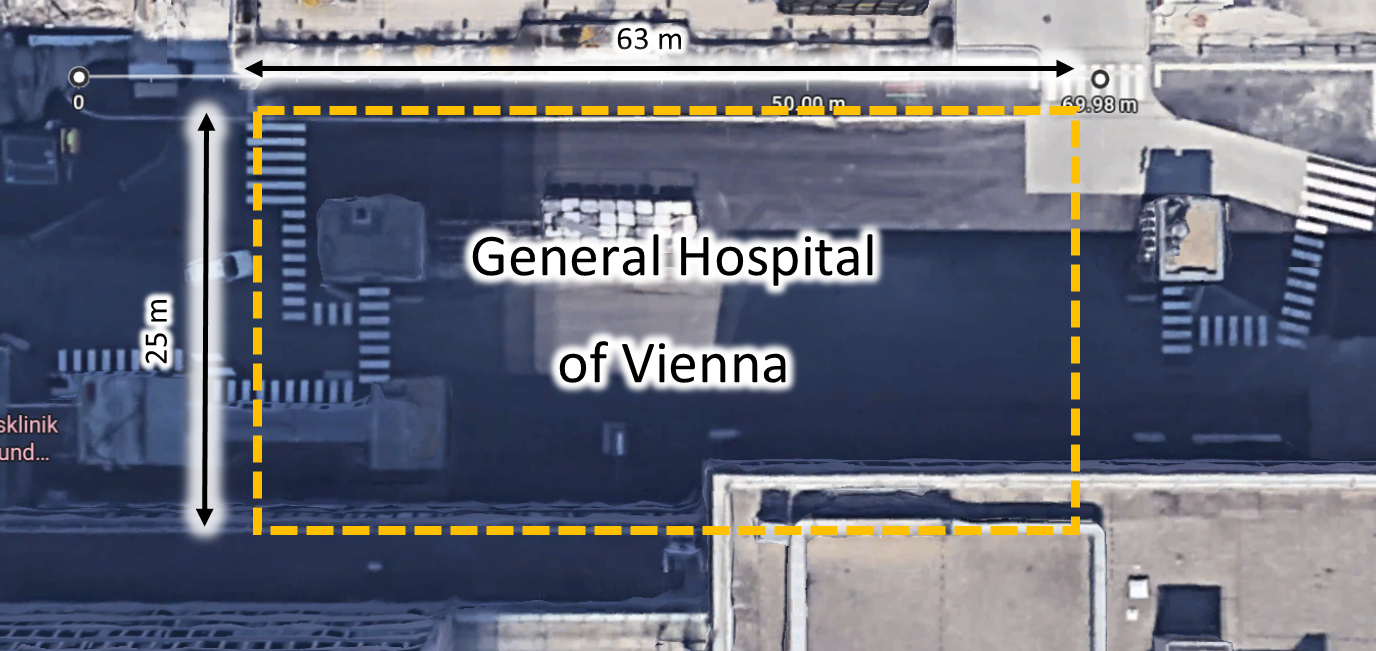
| Race location (GPS) | N48.219576, E16.344883 (Google Pin) |
|---|---|
| Track length | 133.33 m |
| Number of Laps | 3 |
| Total race length | 400 m |
| Type of race | Head-on-head race (2 pilots) |
| Race mode | Best out of 3 races |
| Track material | Asphalt |
| Track profile | Mostly flat with slight inclines and declines (< ±1%) |
| Time limit | 5 min |
| Min. required average speed | 5.5 km/h |
| Starting area | 10 m |
| Max. speed at Start | 5 km/h |
Race description
WarmUp
Prior to the race, pilots are encouraged to perform a warm-up routine in order to prevent potential injuries and prepare the muscles for the race. The warm-up procedure can either be performed stationary on a hometrainer or overground outside of the racing area. The warm-up procedure is not part of the race.
Starting procedure
The pilot must start from a stand-still position within a designated starting area. Inside the starting area, the usage of hands, arm or trunk is allowed to initiate the movement. The start needs to be performed exclusively by the pilot without the support of other team-members.
Race prodecure
After a clear audible start signal, pilots are allowed to initiate the starting procedure. The pilot should exit the starting area within 30 s. Please note that the START line has to be crossed at a low speed (max. 5km/h). The pilot has to cover a total of 3 laps within a time limit of 5 min. Time measurement starts when the first wheel is crossing the START line. The time measurement stops when the first wheel is crossing the FINISH line or when the time limit is reached.
The race track is divided into 20 segments of equal distance (i.e. 10 segments per lap). In case the pilot did not finish the entire length of the track within the specified time limit, the last segment successfully covered will be counted. Each segment covered will be scored 5 Points, amounting to a total of 100 Points. All pilots will be ranked according to the points achieved. In case of equal points, the time required will determine the ranking. In case of equal points and time, the pilots will be assigned the same rank.
Qualification
Each pilot will be allowed a total of 3 runs. For the ranking only the best run is counted.
Finals
The four highest-ranked pilots from the qualification will be invited to the final races. The finals will follow a knockout format. Based on the qualification ranking, Rank 1 will compete against Rank 3, while Rank 2 will compete against Rank 4. The winners of these races will advance to the final to determine 1st and 2nd place. The remaining two pilots will compete in a separate race to determine 3rd and 4th place.
Contact
Dipl.-Ing. Dr. Martin Schmoll
Center for Medical Physics and Biomedical Engineering
Medical University of Vienna
Downloads
Event Team
Paramedic support
- Matthias Lentner (Vienna PreMedics)
- Georg Büchler (Vienna PreMedics)
- Shant Dayan (Vienna PreMedics)
- Sebastian Zauner (Vienna PreMedics)
- Isabella Winkler (Vienna PreMedics)
- Sarah Aumüller (Vienna PreMedics)
- Lena Grubmüller (Vienna PreMedics)
Moderation
- Hannes Müller
Media & Audio
- Christoph Matuschek (Media)
- Wolfgang Birkfellner (Audio)
Volunteers
- Quang Nguyen
- Rostyslav Samonov
- Bernhard Rosenauer
- Isabelle Rösler
- Lucija Dilber
- Diksha Kunj
- Judith Müller
Partners



Supported by






Background image: © WienTourismus/Christian Stemper